This is the official website from the organisers of Jagadhatri Puja in Saidapur ©.
।।अथश्री जगद्धात्री देव्यै नमः।।
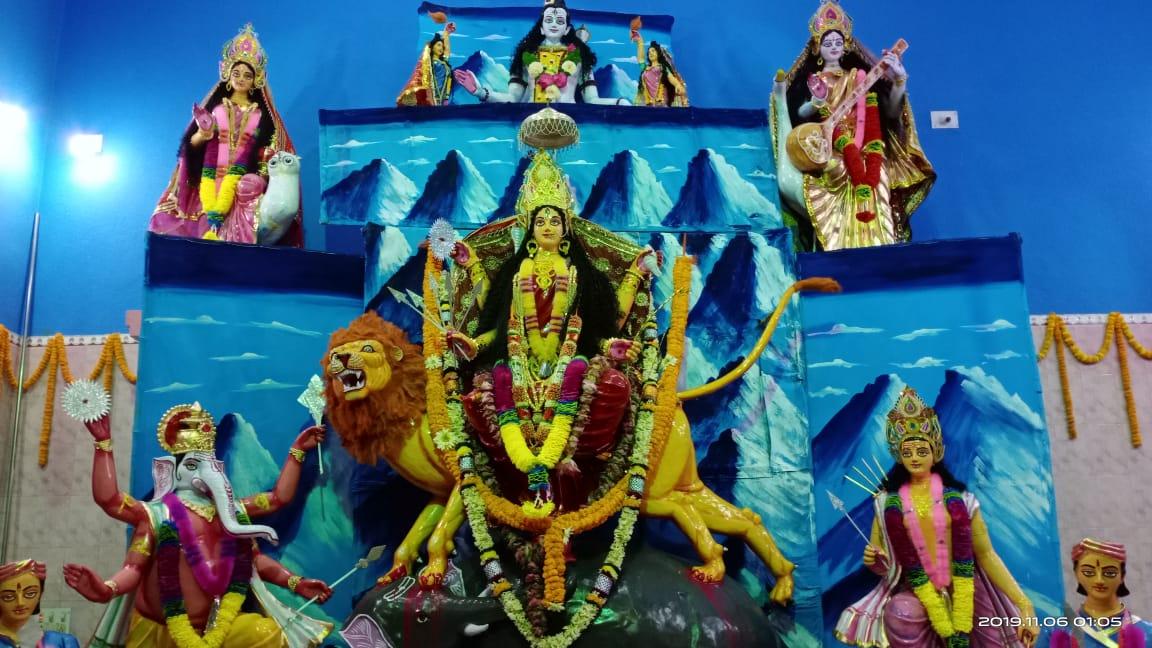
With the boundless grace of Maa Jagadhatri, the grand Pooja ceremony is being celebrated every year since 1901 AD at Saidapur, Godda (Jharkhand), to commemorate the birth of Late Kamlakant Jha, son of Late Heera Jha. The three-day ceremony takes place on Ashtami (the 8th lunar day), Navami (the 9th lunar day) and Dashami (the 10th lunar day) of Shukla-paksha (the bright lunar fortnight or waxing moon in the Hindu calendar) of the Kartik month of Hindu calendar which is considered the holiest month of all.
The story behind the birth of Late Kamlakant Jha goes like this:
Late Heera Jha graduated from Kolkata University in 1882 AD and then started practising law in the high court over there [Kolkata or Calcutta was a vibrant city of then Bengal, which also used to be the capital of British-held territories in India]. Being a respected barrister, he was once invited to attend Jagadhatri Pooja in the city of Chandan Nagar in Bengal. The whole worship process of Goddess Jagadhatri got him very interested, and he asked the priest about the significance of the worship. The priest explained – Maa Jagadhatri represents the power, the peace and She bless Her devotees with offspring. Heera Jha wanted to have his successor. Right there, when the Goddess was in her divine form, he wished for a son with full faith and determined in his mind that if he was blessed with a son by Her grace, he would worship Maa Jagadhatri at his place with all the fanfare every year.
At the time of immersion, when the soulful statue of Goddess Jagadhatri was getting absorbed in the holy flow of the Ganges, the hearts of the Jha couple were emotionally engrossed in the appreciation of Goddess with tears in their eyes and a wish to have blessing with a son. Right then, a flower of reverence fell in the lap of Mrs. Jha, which was a sign of the fulfillment of their wish. Later in 1900, Late Kamlakant Jha was born and from the next year, 1901, Maa Jagadhatri is being worshipped at the village Saidapur.
Late Kamlakant Jha was born in 1900 AD and passed away in 1968 AD. He had a beautiful family with six sons and a daughter. Their names are: 1. Krishna Kant Jha 2. Vishnu Kant Jha 3. Nishi Kant Jha 4. Avni Kant Jha 5. Saroj Kant Jha 6. Shyama Kant Jha 7. Sharda Devi (daughter).
The Pooja (worship) program:
Maa Jagadhatri descends upon the land of Saidapur on Ashtami (the eighth lunar day) of Shukla paksha (the brighter fortnight) of Kartik month. According to the scriptures, the Goddess comes with the whole family and accepts our offerings. At this time of the year, the weather becomes very pleasant, the river water gets sweetened as if the nature is welcoming the Goddess. The devotional tunes from the Band clarinet, the heart touching notes from Shehnai, the Pandal decorations and a huge crowd of devotees, they all jewel and enhance the beauty of the grand temple. The crowd participating in the program stay calm and devotional.
The second day on Akshaya Navami (the ninth lunar day), Trikala Pooja starts from the morning itself. The pooja process is Tantrik. The men-and-women who are on Sanyam (abstinence, a pooja process where devotees with specific wishes, fast and worship), would be present in the temple with their hearts and minds dedicated to Maa Jagadhatri. After the completion of all three Poojas, a Havan (A ritual, rooted in the Vedic religion, in which offerings of food etc. are burnt in order to bring good luck on a special occasion) is performed. Once done, Acharya (the Guru) would distribute the offered flowers to the fasting men-and-women. We have so many stories and experiences of those blessings flourished.
The three-day festivities begin with Maa Jagadhatri’s worship and offerings. As the day progresses, the crowd of devotees take the form of a grand fair and gathering. To leverage the crowd as potential customers, lot of businesses and small shop owners put up their stalls, ranging from balloons and toys, to interesting fun rides like big Ferris wheels and Pirate boats. The whole village becomes an extended family and actively support to make this occasion successful. The City Police administration is also present to take care of any miscreants.
On the third day, Dashami (the 10th lunar day), of the festivities, the Visarjan pooja is performed where the Goddess departs for the holy abode and we all request Her to keep us healthy and prosperous and to come again the next year. Traditionally, the idol was immersed on the night of Dashami, but because of late night inconvenience, not all devotees could participate in the immersion process. More than a decade back, due to divine intervention, there was a catastrophic rain and thundering and the idols couldn’t be immersed that night. As a result, the idols were immersed in the Kajhiya river the next day with a grand procession. The imagery was grand, devotional and unprecedented. This once more proved that:
"वर्त्तमान के प्रलय में भविष्य के नवीन व स्वस्थ सृष्टि का अंकुर विद्यमान होता है (In the catastrophe of the present, the sprout of the new and healthy creation exists)". That set the new trend – now the idols are immersed in the Kajhiya river on Ekadashi (the 11th lunar day) with all the fanfare and huge crowd of devotees. After the idols are immersed, we have a unique and beautiful tradition of bowing to our elders and in return we get blessed for a bright and healthy future.
Maa Jagadhatri Pooja is a Family Pooja which we celebrate every year with all the devotion and fanfare. We pray that the Goddess does welfare to the whole world.
।।जय मां जगत जननी।।
Requestor:
The whole Kamlakant Jha Family (Saidapur)